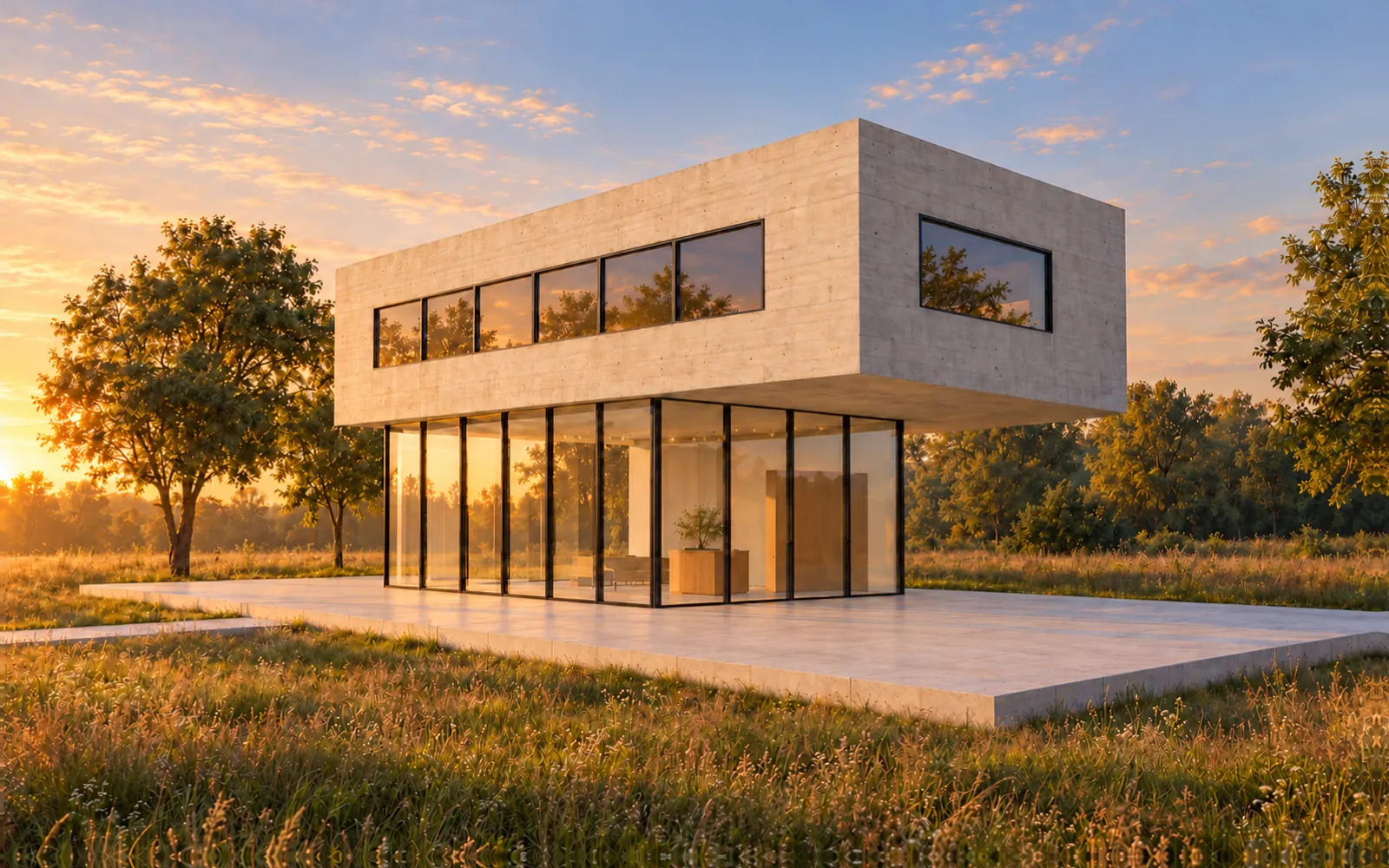
4K for print3840 × 2160 px
Sharp enough for an A1 board.
Final images in 2K for screens, or 4K for competition panels and print.
AI renders for architects
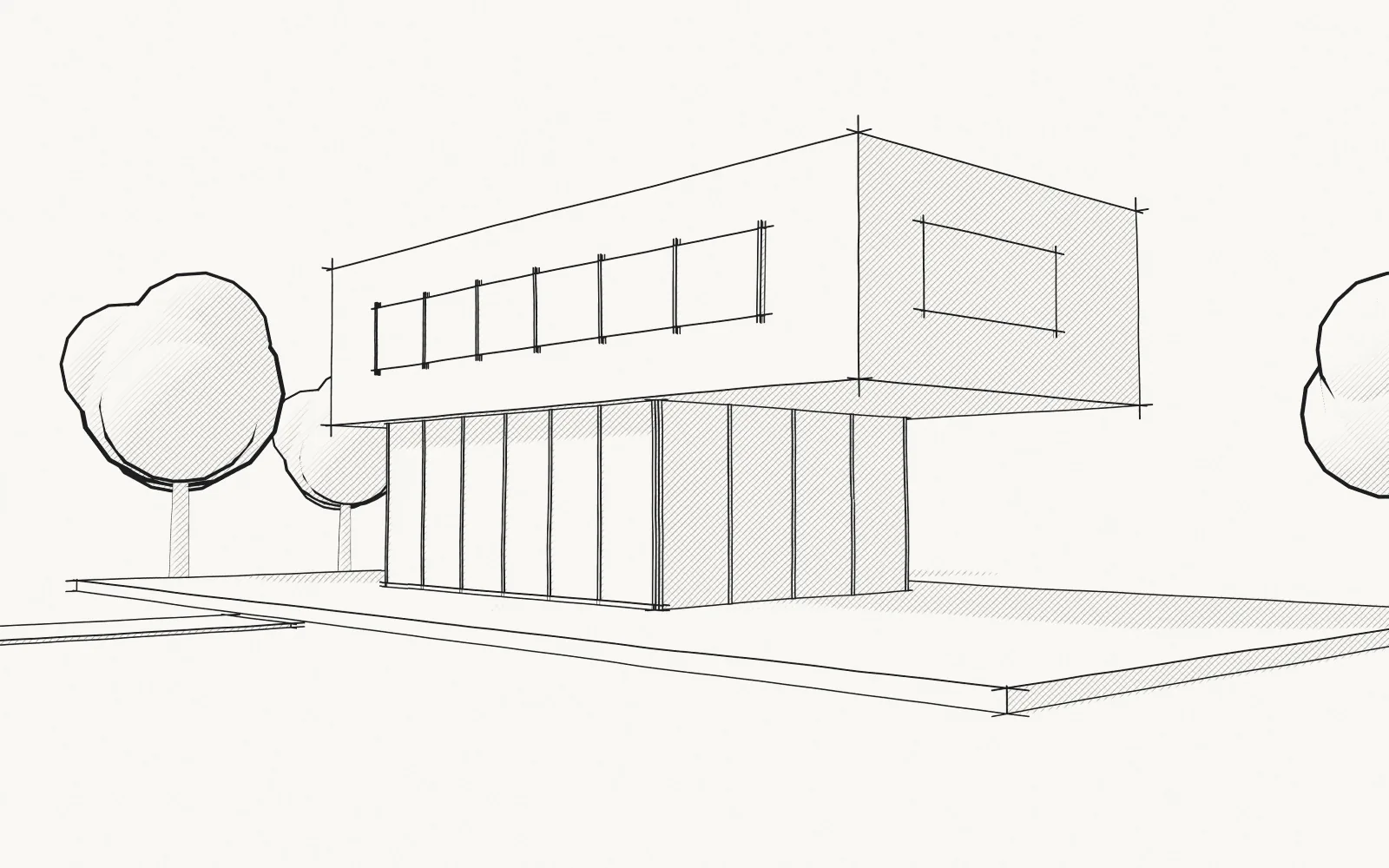
Photoreal renders from a hand sketch, or a CAD or 3D screenshot, in about 20 seconds. No prompts. The first one is free.
Why Sketchfest
Here it takes seconds. A classic render means modelling, materials, lights, render time and retouching: hours for every image.
Time per image
The usual wayhours for every image
Model, materials, lights, render, retouch
Sketchfestabout 20 seconds
What you can drop in
A sketch on paper, or a screenshot of your CAD drawing or 3D model. No DWG or model files: a screenshot is all it needs.
Sketchfest reads images. Frame the view in your CAD or 3D program, take a screenshot, then drop or paste it here.
Mac ⇧⌘4Windows WinShiftS
Drop theseJPGPNGWEBP
Screenshot these firstDWGDXFSKPRVT3DM
How it works
It keeps the geometry you drew, works out depth from your perspective, then adds light, materials and context.
Layers4
Looks
Pick the light and the mood with one click. Drag the line to compare the render with the sketch.
Looks6
Features
Quick studies for 1 credit, then final images in 2K or 4K for boards and print.
4K for print3840 × 2160 px
Final images in 2K for screens, or 4K for competition panels and print.
Follows your lines
Exactly keeps every line. Loosely lets the AI add ideas of its own.
Any format
Keep your drawing's shape, or pick 16:9, 3:2, 4:3, 1:1, 4:5 or 9:16.
Fast
Try all six looks in about two minutes, then make the best one 2K or 4K.
Phone first
Take a photo with your phone, pick a look and render. No scanner, no laptop.
Private by default
Projects are visible only to you, and you can delete anything at any time.
Questions
Still unsure? Write to [email protected] and a real person will reply.
Drag and drop your drawing
A sketch, or a CAD or 3D screenshot.
Or choose a file, or paste one.
One project per drawing, with every render you made from it. Only you can see them.
Your first test render is free. Then pick a plan for fresh credits every month.
Tell us roughly what you make in a month.
Anything else? Write to [email protected] and a real person will reply.
For a real building, usually not. AI can give you ideas and show you a design, but it can't produce drawings that are checked, approved and safe to build.
By the Sketchfest team6 min read
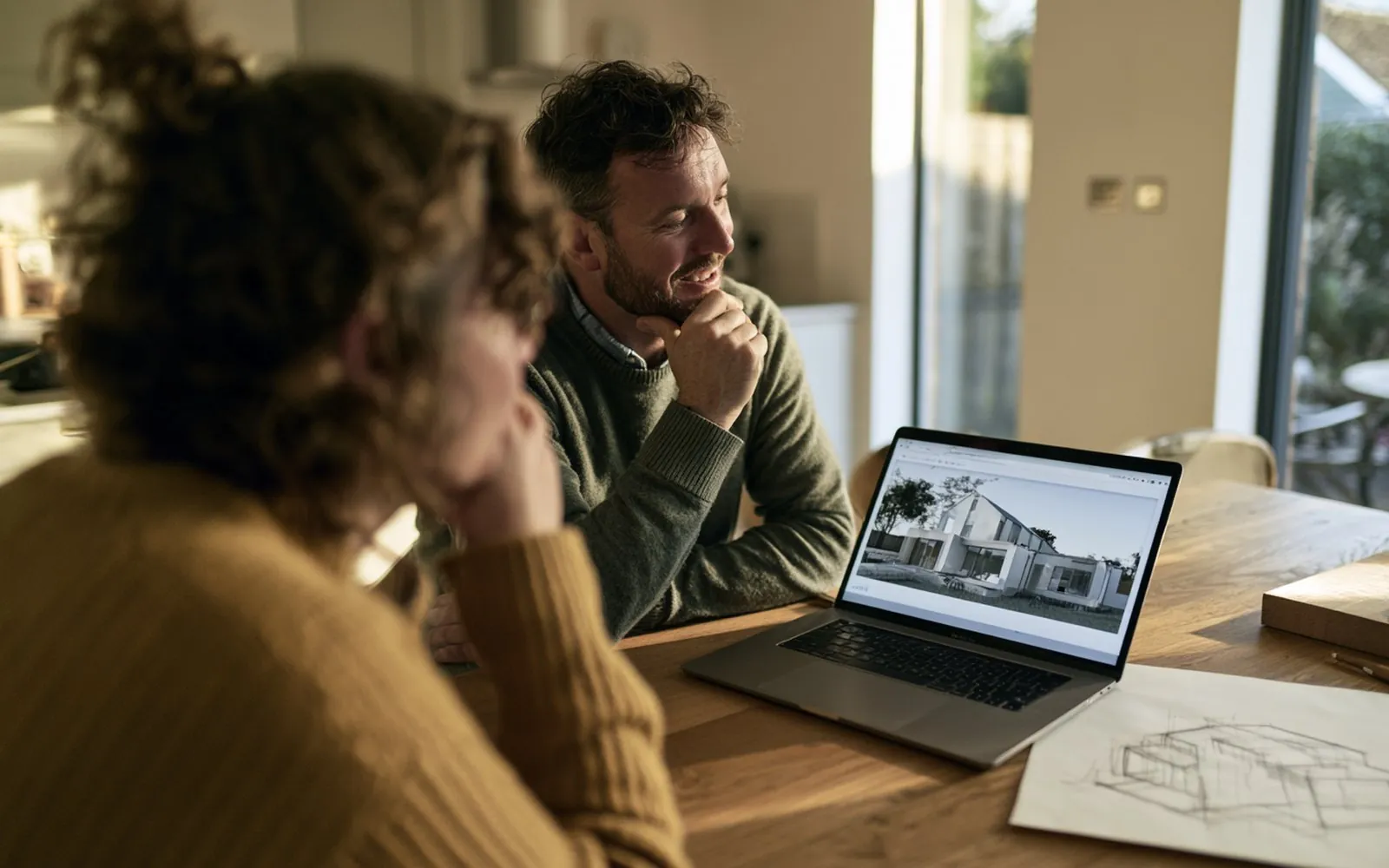
More people are trying. In a 2026 Houzz survey of US homeowners who were renovating, 22% were already experimenting with AI for their project, mostly for ideas and to picture their plans. With architects' fees often at 8% to 15% of the building cost, it's natural to wonder whether AI could do the whole job.
In many places the law says a qualified person has to prepare the drawings anyway. But you don't have to choose: used well, AI makes working with an architect faster and clearer.
Mostly, it's about cost. In the US, architects usually charge 8% to 15% of the construction cost for a home, according to HomeAdvisor, and more for complicated remodels. If a chatbot can sketch a house for free, it's natural to wonder whether you need the architect at all.
Plenty of people are already trying AI. In a 2026 Houzz survey of more than 3,000 US homeowners who were renovating, 22% said they were experimenting with AI for their project. They mostly used it for ideas (64%), to picture concepts (58%) and to compare options (50%). Only 10% used it for permits. And 80% still hired professionals to do the work.
So people use AI to dream and to decide, then hand the real building over to a pro. That's a sensible split, and the rules explain why.
It depends on where you build and what you build. Here's how it looks in four places:
| Where | Architect required? | What the rules say |
|---|---|---|
| US (California) | Not for small homes | Anyone can prepare plans for wood-frame houses up to two storeys plus a basement. Parts that go beyond standard wood framing need an architect or engineer. Rules differ from state to state. |
| UK | No | No law says you must hire one, but you still need building regulations approval and, for many projects, planning permission. RIBA: "If you need planning permission it is likely that you will need an architect." |
| Spain | Yes, for housing | The building law (LOE, Ley 38/1999) says the project for residential buildings must be written by a qualified architect. |
| Germany (Bavaria) | Usually | Permit drawings must come from an architect or a listed engineer. Some small homes can be drawn by certified building technicians or master builders. |
Even where the law lets you draw your own plans, someone still has to make sure the building stands up, meets fire, access and energy rules, fits the site and gets approved. That's a lot to hand to a chatbot.
Rules change and vary by town and region. Check with your local building or planning office before you start. This article is general information, not legal advice.

Quite a lot, as long as you use it for the right jobs:
It doesn't know your site or your local rules. When the UK practice Urbanist Architecture tested chatbots on a house design, the AI praised it, but missed problems an architect spotted straight away: a first-floor window overlooking the neighbours, and a flat-roofed glass box that would look out of place on a street of pitched-roof brick houses.
It can sound sure and still be wrong. AI writes with the same confidence whether it's right or not. A measurement, a height limit or a setback can be invented and look perfectly believable.
It can't take responsibility. If you use AI in an appeal to the Planning Inspectorate in England and Wales, its guidance asks you to say so and to confirm that "you take responsibility for the accuracy of the content". An architect carries insurance for their work. A chatbot carries nothing.
It can't run the build. Choosing builders, checking work on site and solving problems when the walls go up are still human jobs.
Homeowners notice when their architect uses AI well. In the same Houzz survey, among homeowners whose pro used AI, 76% said it helped them picture the project, and 35% said the pro seemed better prepared.
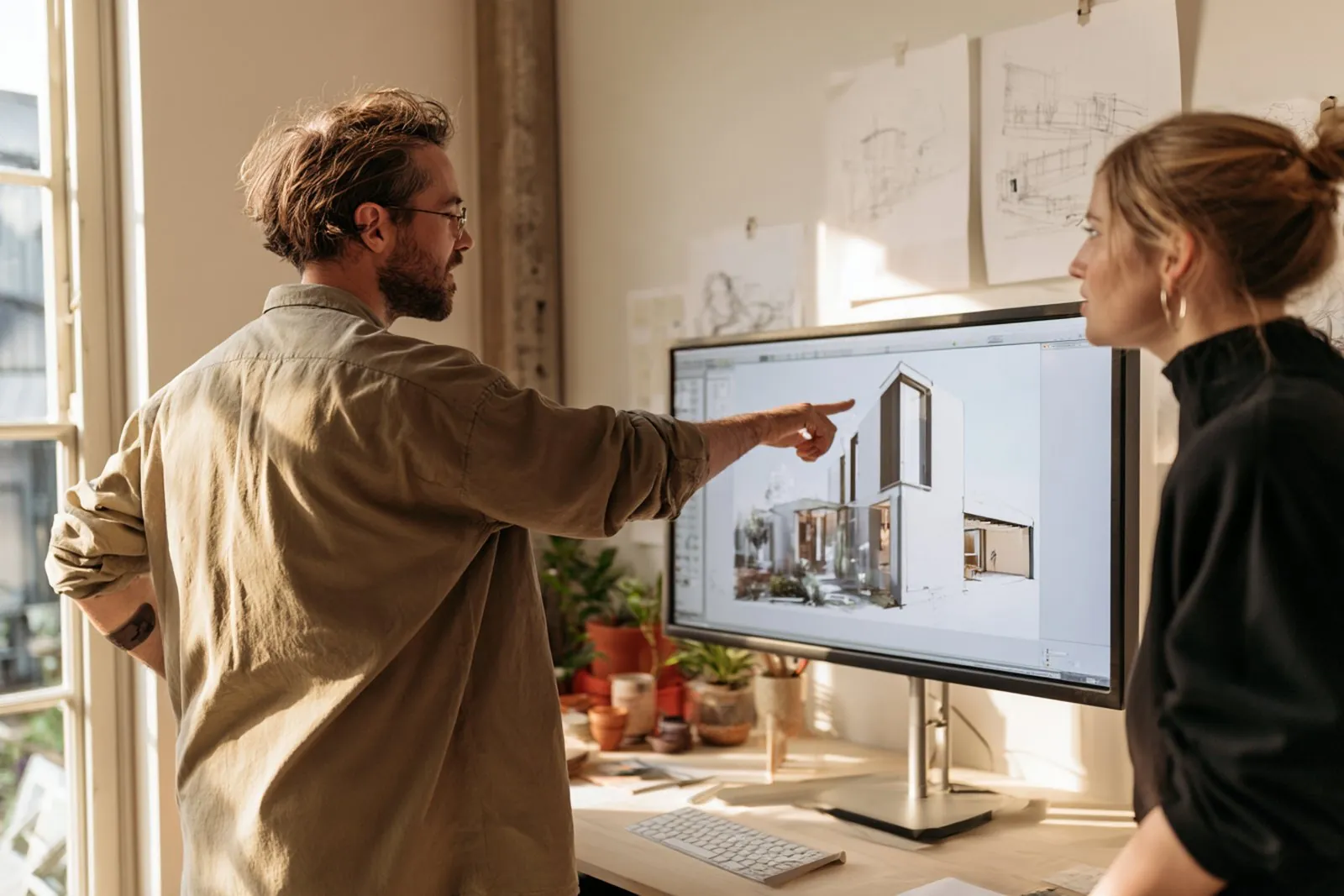
A simple way to work:
For more on what AI can and can't do in the profession itself, read Can AI act as an architect?
General image tools like Midjourney are fun for mood boards. The catch is that you describe a house in words and the AI invents its own. It can look amazing, but it isn't your plan.
Sketchfest works from your drawing instead. It's built for architects and easy to use. You upload a hand sketch, a CAD screenshot or a view of a 3D model, and get a photoreal render of that design in seconds. No prompts to write and no software to install. Architects use it to show clients ideas early, and the render follows the drawing, so what you see is the design you're actually talking about.
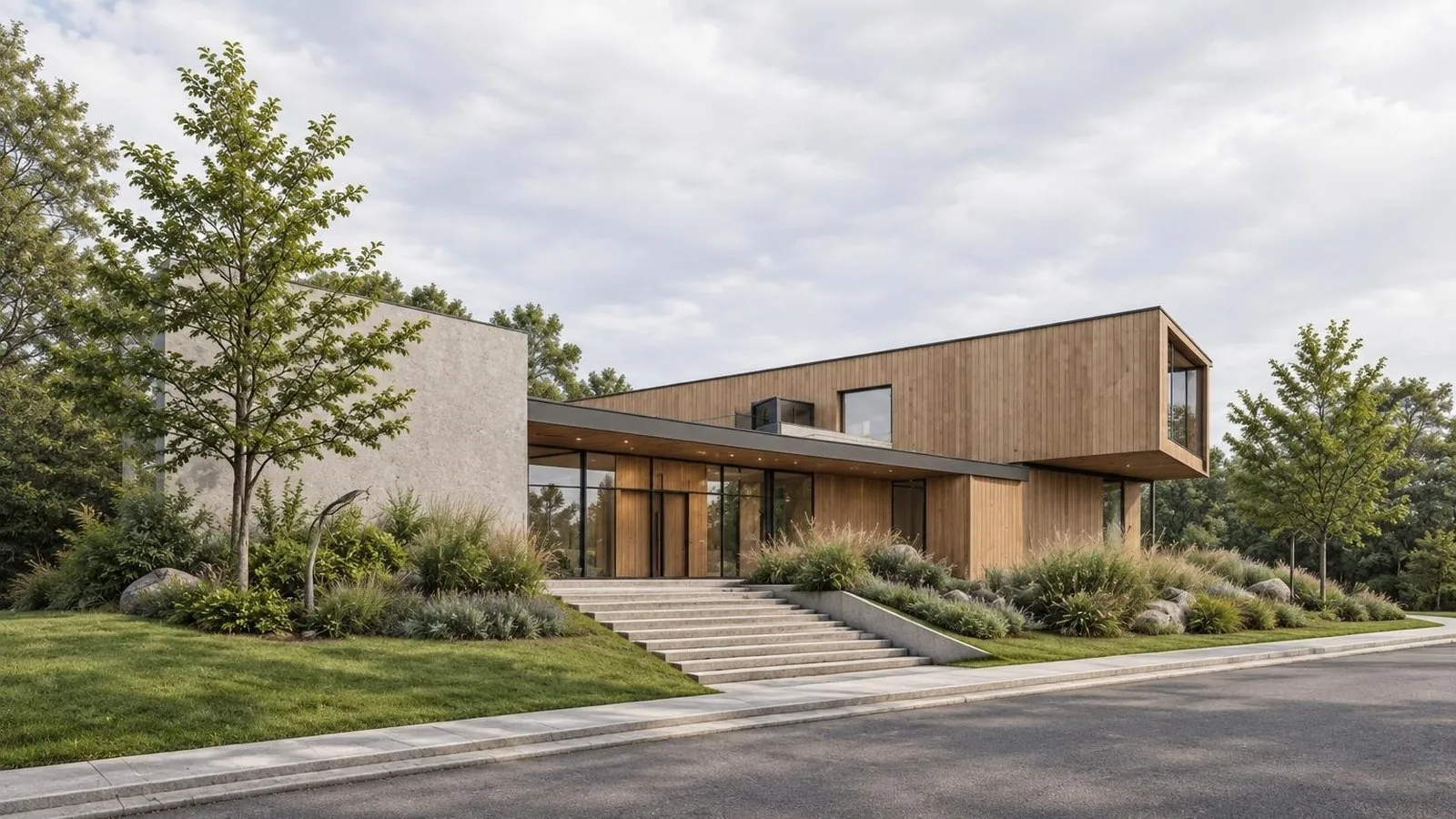
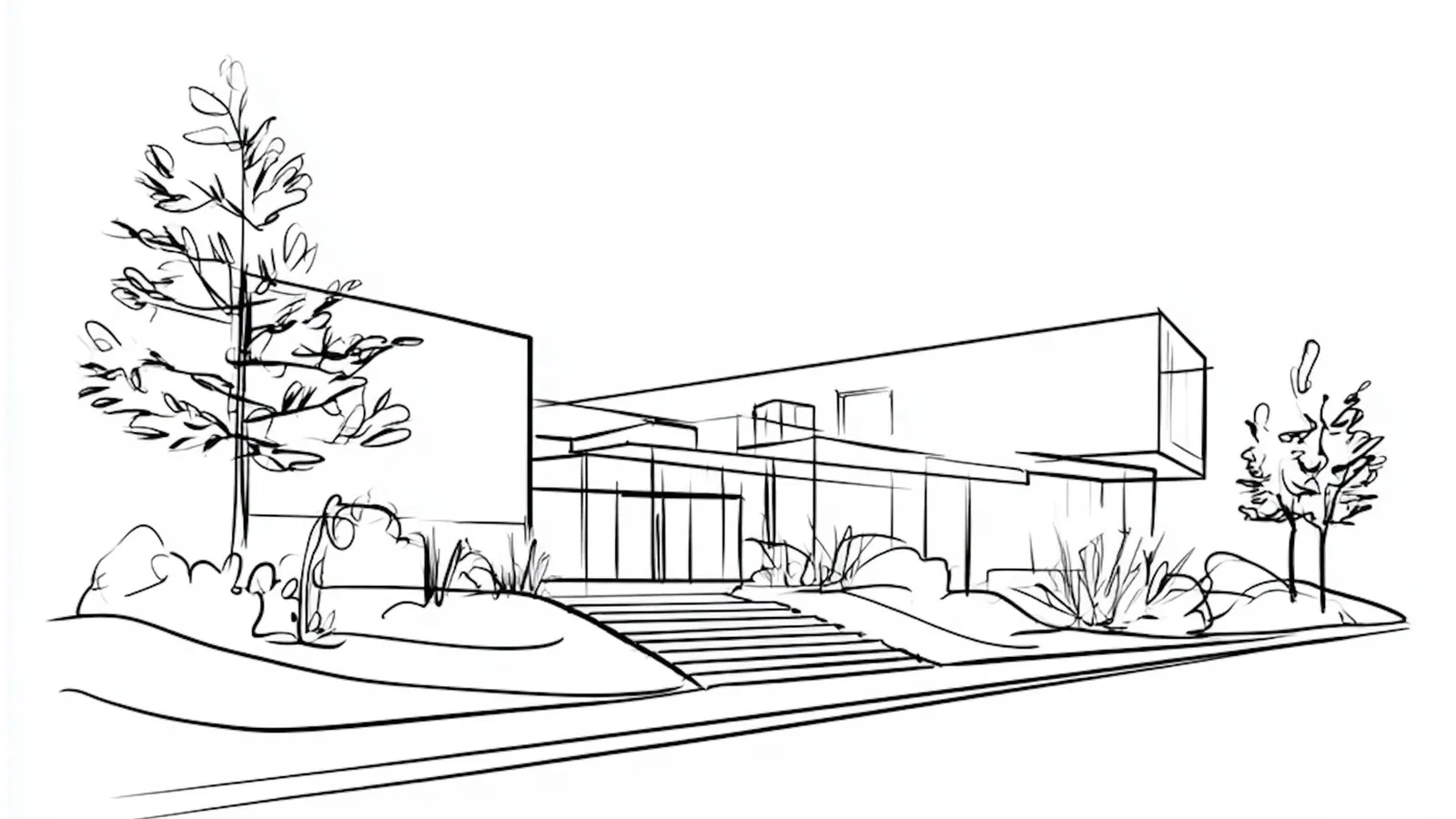 RenderHand sketch
It can suggest layouts and describe rooms, but it doesn't produce accurate, scaled drawings that are ready for a permit. Use it to think through ideas, not as your set of plans.
AI can save time and help you arrive at your architect with a clear brief. Skipping professional design to save money can cost more later if plans are rejected or need to be redone.
Images can help explain your idea, but they don't replace the drawings councils ask for. Be open about which images were made with AI.
Try it on your drawing. Your first test render is free.
Drop a hand sketch, or a CAD or 3D screenshot. Your first test render is free.
 AI in practice
No. AI can't act as your architect, because an architect is a licensed person who takes legal responsibility for a building, and software can't do that.
6 min read AI in practice
Not real ones. ChatGPT can make pictures that look like floor plans, but not drawings with a true scale, dimensions that add up, or stairs that meet building rules.
6 min read AI in practice
Partly. Specialist AI tools can generate layout options fast, as long as you give them the rules: site, brief, codes and goals.
6 min readLast updated 3 November 2026
The short version
Sketchfest (sketchfest.ai) is run by BNER Limited, a private company limited by shares incorporated in Hong Kong (company number 80898063), with its registered office at Unit 1603, 16/F, The L. Plaza, 367-375 Queen's Road Central, Sheung Wan, Hong Kong. You can reach us at [email protected]. In these terms, "we" means BNER Limited and "you" means the person or business using Sketchfest. These terms are the agreement between you and us for using Sketchfest. You buy paid plans from us, and Stripe takes the payment (section 7). All our details are on the company details page.
Sketchfest turns hand sketches, and screenshots of CAD drawings and 3D models, into images using artificial intelligence (AI). The images are made by AI models from other companies, at present OpenAI, with Microsoft as a backup (see the privacy policy). AI results vary: the same drawing can give different images, and an image may not follow your drawing exactly or may show things that are not in it. The images are visual studies, not technical or construction drawings. Render times we show are typical, not promised.
You sign in with a code or a link we email you, or with Google where we offer it. There are no passwords, so keep access to your email account safe: anyone who can read it can sign in. An account is for one person; please do not share it. You must be at least 16 to use Sketchfest, and if you are under 18 you need the permission of a parent or guardian. To buy a plan you must be an adult where you live. Please use an email address you read, because we send sign-in codes and links, downloads and notices about your plan there, and keep your details up to date.
Everyone can make one free test render. You give us your email address and we send you a 6-digit code and a link: typing the code, or opening the link, confirms the address, opens your free account and starts the render. Both work for 24 hours. There is one free render per person, per email address (an address with a +tag, or a Gmail address with dots, counts as the same address), per account and per device, with a daily limit for each network, and a quick check by Cloudflare Turnstile tells people from bots. If you never use the code or the link, your drawing is removed after 2 days, and its locked safety copy 90 days after that (privacy policy, section 8). We may refuse free renders obtained through several accounts, throwaway email addresses or automated tools.
Sketchfest works with credits. Every action shows how many credits it uses before you start: a test render uses 1 credit, a final image in 2K 5 credits, and a 4K print image 10 credits. Final images in 2K and 4K come with a plan. Costs can change over time, but the cost shown when you start is the one that applies.
Credits are not money. They have no cash value, cannot be transferred or sold, and can only be used on Sketchfest. Credits come with your plan every month and are for that month only: unused credits do not roll over and expire when the next month's credits are due. If a renewal payment is late, your leftover credits stay usable for up to a day while it goes through. Yearly plans get their credits month by month, on the same rule. Extra credits from an upgrade expire with the month they were added to. When your plan ends, its unused credits expire with it.
If a render fails, its credits go back to your account automatically. Every drawing, the words you add and every render go through an automatic safety check, and our AI providers have their own filters too (section 10). If one of them stops a render, it does not run or is not delivered, and its credits come back too.
Sketchfest works by subscription. There are three plans, Basic, Plus and Pro, each with a set number of credits every month, billed monthly or yearly. A plan renews automatically at the end of each period until you cancel. You can cancel at any time on the Billing page. The plan then runs to the end of the period you paid for, you keep its credits until then, and it does not renew. Before a yearly plan renews, you get a reminder by email.
You can move to a bigger plan at any time: you pay the difference for the rest of the current period, at the price shown before you confirm, and get the extra credits straight away. A move to a smaller plan, or between monthly and yearly billing, starts at your next renewal. If we change the price of your plan, we tell you at least 30 days before it applies to you, and you can cancel before then.
Who sells your plan: BNER Limited sells the plans and provides the Sketchfest service. Stripe, our payment provider, takes the payment on its secure checkout page and emails you the receipt.
Prices: in euros. The price shown is the full price you pay. If you buy for a business, tick that you are purchasing as a business at checkout and add your company name and VAT number; you can also add them, with your address, on the Billing page. They appear on your invoices from then on.
Payment: by card, Apple Pay, Google Pay or Link, on Stripe's checkout page. We never see or store your full card details. Your receipts and invoices also appear on the Billing page. If a plan payment fails, it is tried again and we let you know by email; that month's credits arrive once the payment goes through. If it keeps failing, the plan ends.
Help with a payment: write to us at [email protected]. If a payment was taken by mistake or without your permission, tell us and we put it right.
If you are a consumer in the European Union or the United Kingdom, you can withdraw from a purchase within 14 days of buying it, without giving a reason: use Withdraw from contract on the Billing page, or write to us at [email protected], and we confirm by email. Before you pay, you tick a box to ask for your plan to start straight away and to accept these terms and the privacy policy, and your credits are ready as soon as you pay. So if you cancel within the 14 days, you pay for what you have already used, as consumer law allows. What you used is counted in credits, at your plan's price per credit: the price you paid divided by the credits your plan gives for that period. For example, Basic monthly is €9 for 60 credits, so €0.15 a credit; Basic yearly is €90 for 720 credits, so €0.125 a credit. We refund the rest to the payment method you used within 14 days, and your plan and its credits end when you withdraw. We keep a record of your tick (the time, your network address and your email address) to show that you asked. Consumers elsewhere may have a similar right under their local law.
Otherwise, payments are not refundable, including for unused credits or the unused part of a period, except where the law requires it or section 12 applies. We look at other refund requests case by case. If a payment is refunded, the unused credits it bought are removed from your account in proportion. If a render fails, its credits come back to your account by themselves. Your legal rights if Sketchfest does not work as described are not affected (section 13).
Your drawings stay yours. You allow us to store your drawings, your words and the images you make, and to process them, including sending them to our AI providers, only to run Sketchfest for you and keep it safe. This ends when you delete them, except for a locked safety copy that we keep for 90 days, and longer only while a report or safety flag about it is open or the law requires it (privacy policy, section 8). We look at them only as the privacy policy describes, and neither we nor our AI providers use them to train AI models.
We claim no rights in the images you make: as far as there are rights in them, they are yours. You can use them for any lawful purpose, including client work, portfolios, competitions and commercial work. AI can make similar images for other people, so we cannot promise that an image is unique or that it can be protected by copyright. Some competitions and clients have rules about AI images, so check them before you submit.
Images made with Sketchfest carry metadata that marks them as made with AI, as the EU AI Act requires. Please keep it. If you publish an image that people could mistake for a real photograph of a real place or event, say that it was made with AI where the law requires it.
You confirm that you have the right to upload what you upload, and that it does not break the law or anyone else's rights.
Sketchfest is for visuals of architecture, interiors and landscape. Do not upload, write or make any of the following, in a drawing, in your words or in a render:
Do not try to get around the safety checks, credit limits, free-render limits or payments; share your account; or scrape, copy, resell, reverse engineer, overload or probe the service, or use bots or scripts on it without our permission.
How we keep to these rules: every drawing, the words you add and every render go through an automatic safety check before anyone sees the result, and our AI providers have their own filters. What they stop is not rendered or not delivered, and its credits come back. A person on our team then reviews what was stopped, as the privacy policy describes. We may remove content that breaks these rules and suspend or close accounts. For a serious or repeated breach we may close the account at once, without a refund for the current period, except where the law requires one. We report illegal content, above all child sexual abuse material and credible threats, to the police or the responsible authority, and keep it as long as they or the law require. Where we can, we tell you first, give our reasons and let you respond.
If you think content on Sketchfest is illegal or breaks these terms, email [email protected] with where it is, why you think so, and your name and email address. We look at every report promptly and tell you what we decided. If we remove your content or limit your account, we tell you why, unless section 14 allows us not to, and how to challenge the decision; a person reviews every challenge.
We work to keep Sketchfest running, but we cannot promise it will always be available or free of errors. We may change, add or remove features, and change the AI models we use. If we stop a feature you pay for, or close Sketchfest, we tell you at least 30 days in advance and refund the part of your plan you have not used.
Nothing in these terms limits the rights you have as a consumer by law, including your rights if Sketchfest does not work as described (in the EU, the rights for digital services under Directive (EU) 2019/770; in the UK, the Consumer Rights Act 2015), or liability that cannot be limited by law, such as for death, personal injury, fraud or gross negligence. If you are a consumer, we are responsible for loss you suffer that was foreseeable and caused by our breach of these terms.
If you use Sketchfest for a business, our total liability to you in any 12 months is limited to what you paid in those 12 months, and we are not liable for indirect losses such as lost profit, lost business or lost data.
Sketchfest images are visual studies. Check them before you rely on them for design, planning, construction or legal purposes.
You can delete your account at any time on the Account page. This deletes your projects and images and ends your plan at once. Credits you have left are lost, and the rest of the current period is not refunded, without affecting your rights under consumer law. We keep our payment records for as long as accounting and tax law require.
Suspending an account: we may suspend your account at once, without notice, while we look into a suspected breach of these terms, fraud, a payment dispute or chargeback, a security risk, or a request from an authority. A suspended account cannot sign in or render, and its plan stops renewing.
Closing an account for a reason: we may close your account at once, without notice, if you break these terms seriously or repeatedly (section 10), act fraudulently or abusively, try to harm Sketchfest or other people, or if the law or an authority requires it. You then get no refund for the current period, except where the law requires one.
Closing an account for any other reason: we may also close your account, or stop offering Sketchfest to you, for any other reason. We then tell you by email at least 30 days before, and refund the part of your plan you have not used.
Reasons: we usually tell you why. We may give no reason, or a short one, where the law does not allow more, where it would harm an investigation or someone's safety, where it would help someone get around our safety systems, or when we close an account with notice (above). If you think we made a mistake, reply to our email and a person will look at it again.
New accounts: we may refuse to open an account or sell a plan to anyone, and if we closed your account for a reason, you may not open a new one without our permission.
If we change these terms in a way that matters, we email you at least 30 days before the change applies. If you do not agree, you can cancel your plan and delete your account before then.
These terms are governed by the law of the Hong Kong Special Administrative Region. If you are a consumer, you also keep the protection of the mandatory laws of the country where you live, and you can bring a claim in the courts there. If you use Sketchfest for a business, the courts of Hong Kong decide any dispute. If something goes wrong, please write to [email protected] first: we reply within 5 working days.
We do not offer or sell Sketchfest to, from or within Cuba, Iran, North Korea, Syria, or the Crimea, Donetsk and Luhansk regions of Ukraine. You may not open an account, buy a plan or use Sketchfest if you are in one of these places or live there, if you act for a person or organisation there, or if you are named on a sanctions list of the United Nations, the European Union, the United Kingdom or the United States. If an account breaks this, we may suspend or close it at once (section 14).
BNER Limited, Unit 1603, 16/F, The L. Plaza, 367-375 Queen's Road Central, Sheung Wan, Hong Kong · [email protected]. We answer by email, in English.
Last updated 14 October 2026
The short version
BNER Limited, Unit 1603, 16/F, The L. Plaza, 367-375 Queen's Road Central, Sheung Wan, Hong Kong, runs Sketchfest and is the controller of your personal data (the "data user" under Hong Kong's Personal Data (Privacy) Ordinance). For anything in this policy, write to our Privacy Officer, BNER Limited, Unit 1603, 16/F, The L. Plaza, 367-375 Queen's Road Central, Sheung Wan, Hong Kong, or at [email protected].
Wherever you live, including in the EU and the UK, you can write to us directly about your data, and we handle every request ourselves.
You need to give us an email address to have an account, because we sign you in and send your downloads with it. If you do not, we cannot open an account for you. Everything else is up to you. Please do not upload drawings with other people's personal data that is not needed.
| What for | Legal basis (GDPR art. 6) |
|---|---|
| Running Sketchfest: your account, renders, projects and downloads | Contract |
| Plans, payments and our accounting records | Contract, and legal obligation for the records |
| Emails about sign-in, downloads, payments, your plan and changes to our terms | Contract |
| Keeping Sketchfest safe and fair: stopping fraud and abuse, one free render per person, limits, logs, and a record of our team's access | Legitimate interest |
| The automatic safety check, and keeping a locked copy of what it stops and of what is deleted, to investigate abuse and illegal content | Legitimate interest (keeping Sketchfest safe and lawful); legal obligation when we must keep or report illegal content |
| Recording your request to start a plan straight away, in case you cancel within 14 days | Legal obligation and legitimate interest |
| News and offers by email | Your consent, which you can withdraw at any time |
| Improving Sketchfest with counts that do not identify you, such as how often each look is used | Legitimate interest |
| Measuring visits and our ads, and showing Sketchfest ads on Facebook, Instagram and other sites (Google Analytics and the Meta Pixel) | Our legitimate interest in knowing how people find and use Sketchfest, and in advertising it. You can object and turn them off at any time under Cookie settings at the bottom of our pages, and they stop at once |
| Answering your messages | Contract or legitimate interest |
| Legal claims, and requests from authorities | Legal obligation or legitimate interest |
News and offers: only if you tick the box, we use your name and email address to send you tips, news and offers about Sketchfest's own services. We never use them for this without your consent, and we never give them to others for their marketing. You can stop at any time with the unsubscribe link in every such email, or on your Account page.
Your right to object: where we rely on legitimate interest, you can object at any time, for reasons relating to your situation. We then stop, unless we have compelling reasons that override your interests, or need the data for legal claims.
We do not make decisions about you based only on automated processing that have legal or similarly significant effects on you.
To make an image, we send your drawing, your settings and any words you add to one of our AI providers, which processes them for us and sends back the image:
They work under data processing terms with us. They do not use your drawings or images to train their models, and may keep them for up to 30 days only to detect abuse. We store the images they send back with your project. Make 2K and Make 4K enlarge a render you already made on our own server, without an AI provider.
The automatic safety check: before an engine sees your drawing, and before you see a render, both go, with any words you add, through OpenAI's moderation service, which looks for sexual content, violence, self-harm, hate, harassment and illegal activity. It does not use them for training. If it, or an engine's own filter, stops a render, the render does not run or is not delivered, your credits come back, and we keep a locked copy so that a person on our team can review it (terms, section 10). These checks only decide whether a render can go ahead; any decision about your account is made by a person.
Who can see them: only you. Our team cannot browse your drawings or renders. We open them only when you ask us for help with them, when they are reported or stopped by a safety check, or when the law requires it. Each time, we record who looked, when and why, and you can ask us for that record. If they are illegal, we may give them to the police or the responsible authority.
Providers who process data for us, under contracts that oblige them to protect it and use it only on our instructions:
| Provider | What for | Where |
|---|---|---|
| DigitalOcean | Our server: your account, drawings and images | Frankfurt, Germany |
| Cloudflare | Network, protection against attacks, and the bot check on the free render and the contact form (Turnstile) | Worldwide network |
| Mailgun (Sinch) | Sending our emails | EU region |
| OpenAI | Every render and final image, and the automatic safety check | United States |
| Microsoft | A backup for test renders when OpenAI is down | United States, and other Microsoft regions |
| Google (Google Analytics) | Measuring visits, unless you turn it off under Cookie settings | United States and other countries |
Companies that use your data as controllers in their own right:
We also share data, only as far as needed, with our professional advisers (such as accountants and lawyers) under a duty of confidentiality, with authorities when the law requires it, and with a buyer if Sketchfest is ever sold, in which case we tell you first. We never sell your data, and there are no ads on Sketchfest itself.
Your account, drawings and images are stored on our server in Frankfurt, Germany. We are a Hong Kong company, and our team may reach that data from outside the EU. Some providers process data in other countries, mainly the United States (among them Google and Meta, for the visits they measure). Where data protection law asks for safeguards, we rely on an adequacy decision, such as the EU-US Data Privacy Framework and its UK extension for certified providers, or on the European Commission's standard contractual clauses, with the UK addendum for UK data. Wherever your data is processed, it gets the protection this policy describes.
Everything travels encrypted (HTTPS). Your drawings and images are only sent to your own signed-in browser, and links to them do not work for anyone else. Our team signs in with a password and an authenticator code, and every look at your files is logged. Card details stay with Stripe. If a breach puts your data at risk, we tell you and the authorities as the law requires.
You can ask to see, correct, delete or take a copy of your data, to restrict or object to how we use it (section 3), and you can withdraw consent at any time. Analytics and advertising: turn them off under Cookie settings, at the bottom of our pages. You can do most of this yourself on the Account page: download my data, delete my account, and email choices. For anything else, write to our Privacy Officer at [email protected] or BNER Limited, Unit 1603, 16/F, The L. Plaza, 367-375 Queen's Road Central, Sheung Wan, Hong Kong. We reply within one month and do not charge for it; we may ask you to confirm who you are. When you ask us to delete your data, we delete it, except the locked safety copies for their 90 days and what the law requires us to keep. Stripe keeps its own payment records, which you can ask Stripe about (stripe.com/privacy).
If you are unhappy with how we handle your data, please tell us first. You can also complain to a data protection authority: in the EU, the one where you live or work (in Spain, for example, the AEPD at aepd.es); in the UK, the Information Commissioner's Office (ico.org.uk); in Hong Kong, the Privacy Commissioner for Personal Data (pcpd.org.hk).
We use what Sketchfest needs to work and stay safe and, unless you turn them off under Cookie settings, Google Analytics and the Meta Pixel to measure visits and our ads (section 3). The cookies page lists each one.
Sketchfest is not for children under 16, and we do not knowingly collect their data. If you think a child has given us data, write to us and we delete it.
If we change this policy in a way that matters, we email you before it applies. The date at the top shows the latest version.
Last updated 14 October 2026
Sketchfest uses the cookies and browser storage it needs to work and stay safe. From the moment you open the site, it also uses cookies from Google Analytics and the Meta Pixel, to measure visits and our ads. You can turn those off at any time.
| Name | What it does | How long |
|---|---|---|
| sf_sid (cookie) | Keeps you signed in | 90 days, or until you log out |
| sf_dev (cookie) | A random device ID: one free render per device, and lets you keep it when you sign in | 400 days |
| __cf_bm, cf_clearance (cookies, by Cloudflare) | Only when Cloudflare checks for bots or attacks: remember that your browser passed the check | About 30 minutes |
| Cloudflare Turnstile | On the free render and the contact form: tells people from bots, without puzzles | The visit |
| Local storage: sf_prefs | Remembers settings such as your last look and format | Until you clear it |
| Local storage: sf_trial_job, sf_trial_used, sf_free_wait | Your free render on this device, and the email its link went to while you wait | Until you sign in or clear it |
| Local storage: sf_pending, sf_paid | The email a sign-in code went to, and the page to return to after paying | Until used, or you clear it |
| Local storage: sf_cookies | Remembers that you closed the cookie notice with OK, or turned analytics and advertising off or on, and when | Until you change it or clear it |
| _ga, _ga_<id> (cookies, by Google Analytics) | From your first visit, unless you turn them off: counts visits and tells returning visitors apart | 2 years |
| _fbp, _fbc (cookies, by the Meta Pixel) | From your first visit, unless you turn them off: measures visits from and to our ads on Facebook and Instagram, and lets Meta show you our ads | 90 days |
| sf_track (cookie) | Only when you turn analytics and advertising off: tells our server not to send your steps to Meta either | 1 year |
| IndexedDB: sketchfest | Copies of your drawings and images on this device, so the studio opens quickly | Until you delete them or clear it |
When you pay, you are on Stripe's checkout page, where Stripe sets its own cookies for payment security and fraud prevention (Stripe's cookie policy).
Analytics and advertising cookies: turn them off or on again under , also at the bottom of our pages. Turning them off deletes their cookies on our site. You can also use Google's opt-out (tools.google.com/dlpage/gaoptout) and your ad settings at Meta.
Your browser settings let you block or delete any cookies and stored data. If you block the sign-in cookie, you cannot stay signed in; if you clear the device cookie, it does not give you another free render.
Our fonts load from our own server, so loading the page does not send your details to a font service.
Who runs Sketchfest, and how to reach us.
All prices are in euros. The price shown is the full price you pay.
The Sketchfest name, logo, website design and software belong to BNER Limited. The drawings you upload and the images you make are covered in the terms of use.